
The rebirth of Hikaru Nakamura
In 2015, Hikaru Nakamura was the world No. 2. Within four years, he’d dropped 80 ELO and to 22nd in the world, choosing streaming over classical chess. Then he came back nearly as strong as he left.

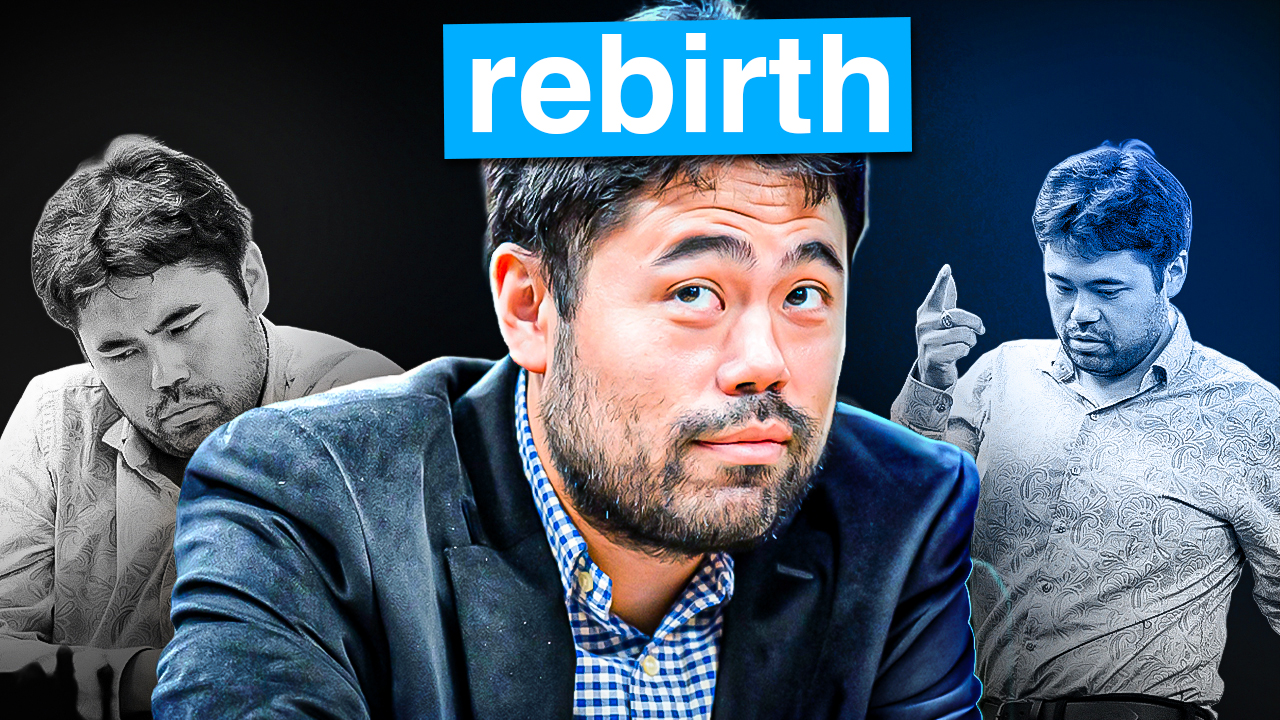
In October 2015, Hikaru Nakamura reached a rating of 2816, second in the world behind only Magnus Carlsen. Four months earlier he had become the ninth player in history to cross 2800.
Then his classical career began to fade. Between late 2015 and the end of 2019, he lost around 80 rating points and fell from second in the world to 22nd. By 2021 he had stopped playing classical chess altogether, and FIDE listed him as inactive after more than two years without a rated classical game.
It looked like a familiar story: an elite player drifting out of form. It was something else. The decline was, in effect, a calculated trade, one that would prove far more valuable than the rating points it cost.
Why did Nakamura's classical career stall so abruptly after 2015? And why, by 2026, does it feel as if he’d never left?
The peak
By 2015, Nakamura was 27 and at the height of his powers. He had won four US Championships, Tata Steel in 2011, the London Chess Classic in 2013 and the Zurich Chess Challenge in 2015.
He did it in one of the strongest eras the game has seen. At Tata Steel 2011 alone, the top five included Viswanathan Anand, Carlsen, Levon Aronian and Vladimir Kramnik.
2015 was his best year. Alongside the Zurich title, he climbed from 2776 in January to 2816 in October. Many strong results went largely unnoticed because of who finished ahead of him. He was second in the FIDE Grand Prix series behind Fabiano Caruana, third at Norway Chess behind Veselin Topalov and Anand, and third at the Sinquefield Cup behind Carlsen and Aronian.
The players who denied him those titles averaged around 2809. Carlsen and Anand alone own ten world championship titles between them. Nakamura's reputation as a player who rarely converted strong form into tournament wins is, in that light, somewhat unfair.
By the end of 2015 he had a string of titles and the highest rating of his career. The question is why that level did not continue.
The slide
The 2016 Candidates
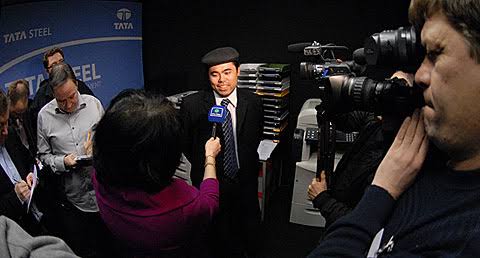
Nakamura did not fall off a cliff after 2015. But the 2016 Candidates in Moscow proved an important moment for what came next.
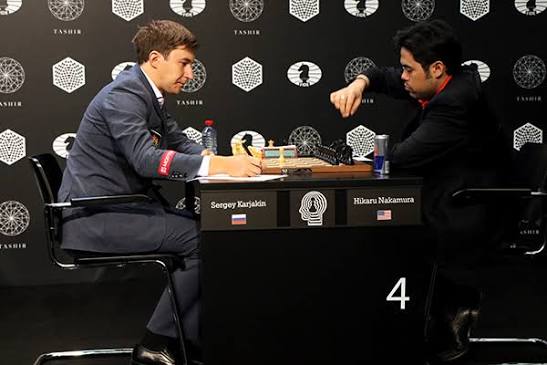
He drew with Caruana in round one, missing chances to convert a slight middlegame edge. He lost to the eventual winner, Sergey Karjakin, in round two, then drew Peter Svidler, Anish Giri and Anand. Aronian beat him in round six. A win over Topalov in round seven was immediately followed by a loss to Caruana in round eight, and from there the tournament became damage control.
He drew Karjakin, Svidler and Giri, then finished strongly with wins over Anand and Topalov before a final-round draw with Aronian. He scored seven points, finishing seventh in a tie of players on that score, while Karjakin won with 8.5.
The Candidates is unforgiving. Rating and reputation count for little across 14 rounds where every game matters. For a player with a better option elsewhere, the appeal of stepping back is obvious.
Streaming
Nakamura had that option. In July 2017 he went live on Twitch for the first time as GMHikaru.
Success did not come quickly. He only began streaming regularly in 2018, and even then his audience was a fraction of what it would become. But his attention was now split, and that showed in his gradual slide from second in the world.
It was, in effect, a calculated decision. Even with his full focus on classical chess in 2015, he had not come particularly close to the world title. Trying something new carried limited downside.
By 2019 he was streaming more than 30 hours a week to a sizeable audience. Crucially, he was still competing at the top level, and his results fed the growth of the channel.
He won Gibraltar in 2017, but missed the 2018 Candidates after a third-round exit at the World Cup and a seventh-place finish in the Grand Prix. That setback arguably pushed him further towards streaming, and it would pay off.
In 2018 he won the Paris Grand Chess Tour event, the Saint Louis Rapid & Blitz and the London Chess Classic finals, earning around US$225,000 in prize money. In 2019 he won his fifth US Championship and finished second to Carlsen in the Tata Steel Rapid & Blitz.
He was the only elite grandmaster seriously attempting to build a streaming career, and his personality suited it. Outspoken, entertaining and comfortable being disliked, he was a natural fit for a platform that rewards personality.
Live streaming full-time
In 2019, Nakamura's streaming career was impressive but still largely contained within the chess community. 2020 changed that.
The pandemic kept much of the world indoors from March 2020, and streaming boomed. Watching a world-class player think aloud while chatting with viewers was an easy fit for audiences looking for company. Chess.com's streamer events and Netflix's The Queen's Gambit, released in October 2020, added fuel.
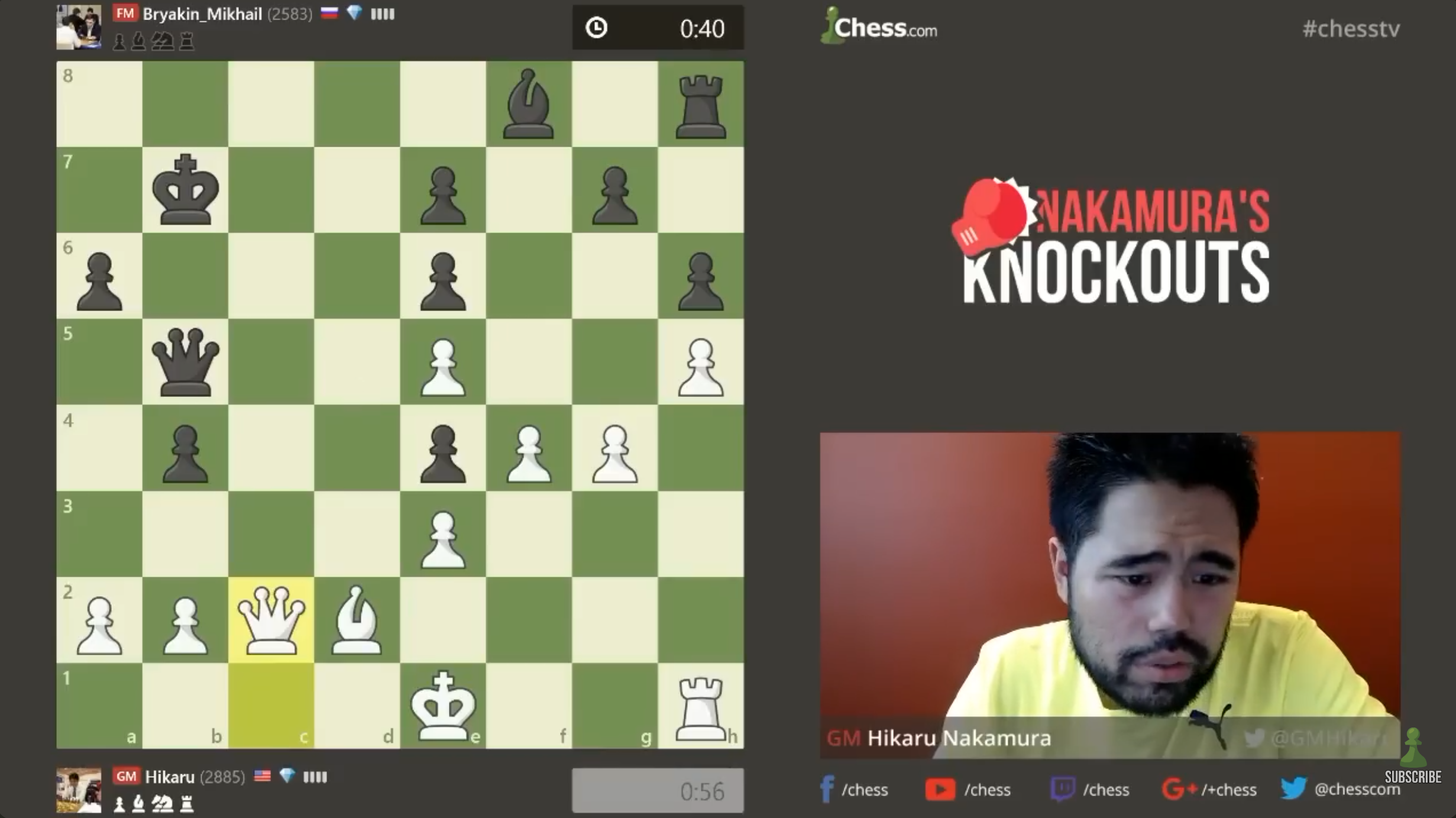
Nakamura passed 500,000 Twitch followers in 2020 and reached a peak of around 80,700 concurrent viewers in early 2021, up from a few thousand in 2019.
Around this time he effectively stepped away from classical chess. Travel restrictions made over-the-board events difficult anyway, and by 2021 FIDE had him listed as inactive.
He seized the streaming opportunity and never stopped. In 2023 he signed a deal to stream on Kick, reportedly worth far more than classical chess could have paid him.
A boom driven partly by the pandemic could not last forever. Online chess remained more popular than before, but the peak streaming audiences did not return. Even during chess's renewed surge in 2023, many fans preferred playing to watching.
Then came an offer from FIDE president Arkady Dvorkovich: a wildcard place in the 2022 FIDE Grand Prix. Nakamura saw a chance to test whether he could still compete with the elite.
Hikaru’s return
The 2022 Grand Prix
The timing made sense. Covid restrictions were easing, streaming hype was cooling, and the Grand Prix offered a path to the Candidates.
Streaming had also changed Nakamura's value to organisers. He had always been strong enough to earn invitations. Now he was one of the biggest draws in the sport, arguably second only to Carlsen. But fame would not win games. He still had to prove he could compete.
The 2022 Grand Prix was notoriously complicated. It was played over three legs, with each player competing in two. Each leg had four groups, with group winners advancing to knockout semi-finals and a final. Series points from group finishes and knockout wins decided the two Candidates places. It was also the last Grand Prix before FIDE replaced the format with the FIDE Circuit.
Nakamura's first group, in Berlin, was tough for a player who had not played classical chess in more than two years. It included Alexander Grischuk, Andrey Esipenko and Étienne Bacrot.
He drew Bacrot in round one, then beat Esipenko in round two. A draw with Grischuk, combined with Esipenko beating Bacrot, cut his lead to half a point. Round four brought another draw with Bacrot while Esipenko drew Grischuk. In round five Nakamura beat Grischuk, but Esipenko beat Bacrot to stay close.
In the final round, Esipenko had white against Nakamura and held the better position for most of the game, but Nakamura defended to a draw and won the group.
In the semi-final against Richard Rapport, he created an early imbalance, navigated the endgame and won on move 71, then held a draw with black against Rapport's King's Indian Attack.
The final against Aronian was tight. Aronian neutralised Nakamura's Ruy Lopez with white, then held a Giuoco Piano with black. In the 15-minute rapid tiebreaks, Nakamura won both games, showing how sharp his faster chess had become during his streaming years.
In his second leg, Nakamura's group included Aronian, Esipenko and Grigoriy Oparin. He started badly: a loss to Aronian, then draws with Esipenko and Oparin. In a six-game group, it was close to disastrous.
He recovered with wins over Aronian and Oparin. Then, on the final day, every result went his way. Maxime Vachier-Lagrave, Aronian, Leinier Domínguez and Giri, the only players who could overtake him in the overall standings, all lost and failed to reach the knockout stage, where further points were on offer.
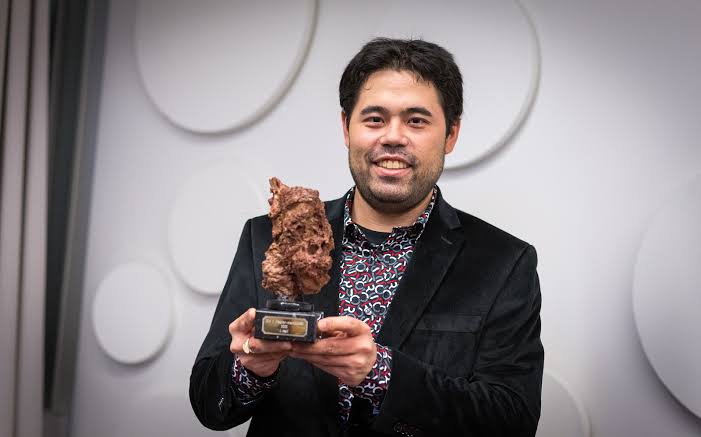
Nakamura beat Esipenko with black to win the group, then beat Shakhriyar Mamedyarov in the semi-final before losing the final to Wesley So on tiebreaks. By then it did not matter. He had already won the Grand Prix series and qualified for the Candidates.
The 2022 Candidates
The world title was suddenly within reach. In December 2021, after beating Ian Nepomniachtchi, Carlsen had warned that those expecting him to play the next title match were likely to be disappointed. But he only formally confirmed he would not defend the title in July 2022, after the Candidates had finished.
The players in Madrid therefore did not know that second place would be enough to reach the world championship match, or that Carlsen would not be waiting for them.
Even second place would be a formidable task in a field this strong.
Nakamura's start was poor. He lost to Caruana in round one while Nepomniachtchi beat Ding Liren. In round two he responded with a statement win over Teimour Radjabov while every other game was drawn, closing to within half a point.
He drew Alireza Firouzja in round three. In round four, while he drew with Rapport, Nepomniachtchi beat Firouzja and restored a full-point lead. Every game was drawn in round five, including Nakamura's solid draw with the leader.
In round six, Nakamura drew Ding while Nepomniachtchi beat Jan-Krzysztof Duda and Caruana beat Firouzja, leaving Nakamura a point off second. In round seven Nepomniachtchi and Caruana won again while Nakamura drew Duda. He was two points off the lead and 1.5 behind second.
In round eight he struck back, beating Caruana while Nepomniachtchi drew. The direct win over his rival made up a full point, and he moved to sole third, half a point behind Caruana.
He could not hold the momentum. In round nine he lost to Radjabov while Caruana drew Nepomniachtchi. In round 10 he hit back again, beating Firouzja as Caruana lost to Duda. The two Americans were level in the fight for second.
Nepomniachtchi pulled clear for first, beating Firouzja in round 11. Behind him, Nakamura drew Rapport while Caruana lost to Ding. Ding had been quietly excellent. After losing to Nepomniachtchi in round one, he had gone unbeaten, and wins in rounds nine, 10 and 11 lifted him past both Americans.
In round 12, Ding lost to Radjabov while Nakamura drew with Nepomniachtchi. Nakamura was back in contention. In round 13 he beat Duda while Ding drew Firouzja. With one round left, Nakamura was in sole second, half a point ahead of Ding.
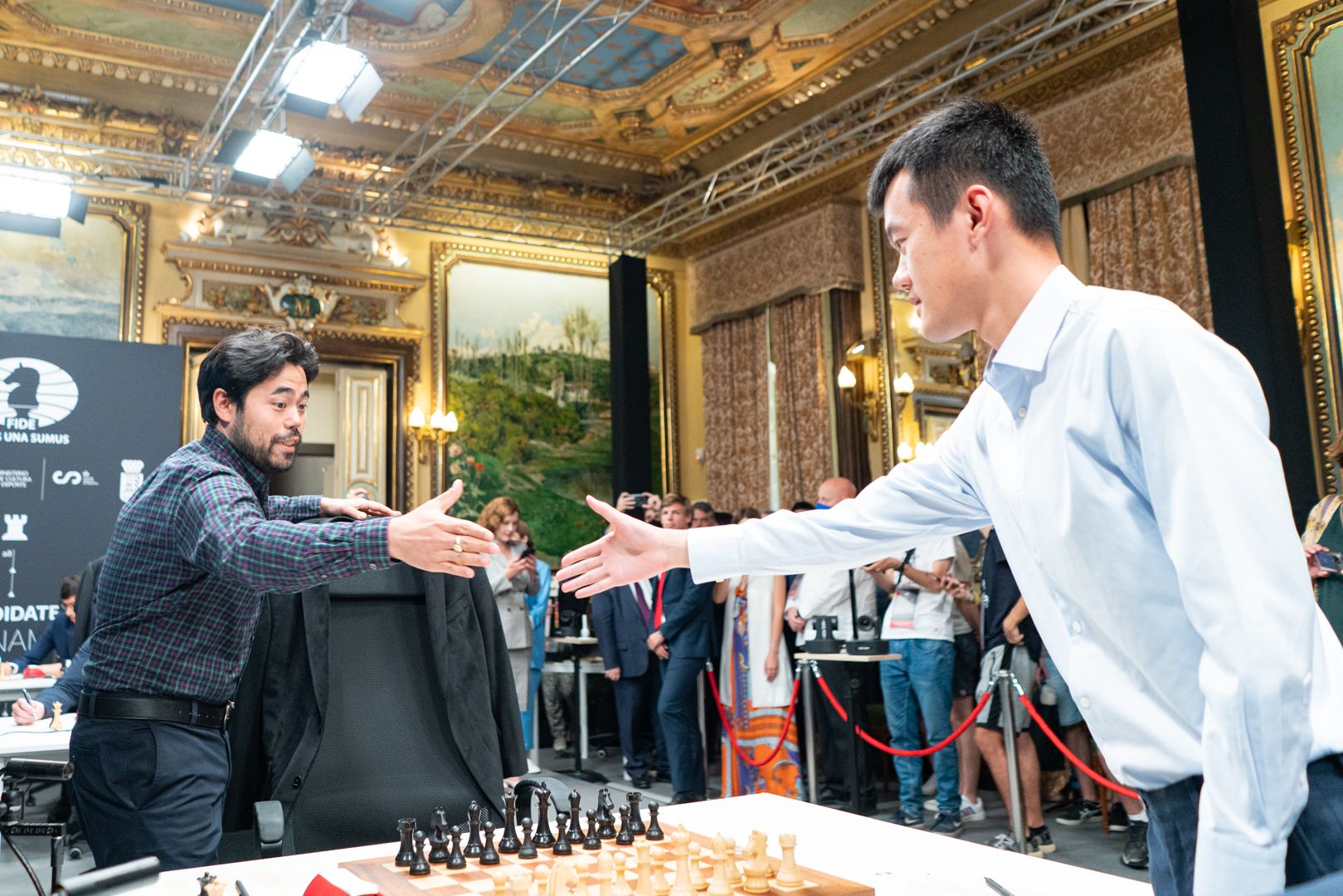
The final-round pairing was Ding against Nakamura. A draw would guarantee Nakamura second place.
With black, he chose the Tarrasch Defence and aimed for solidity. The position was technically level, but Ding's pieces were far more active. On move 35, Nakamura's Bd8 handed Ding an advantage of about a pawn. Ding offered one route back with 38. e4, but the saving reply, ...f3, was far from obvious, and Nakamura missed it. The advantage grew to around four pawns, and Nakamura resigned on move 58.
- 1.
- 2.
- 3.
- 4.
- 5.
- 6.
- 7.
- 8.
- 9.
- 10.
- 11.
- 12.
- 13.
- 14.
- 15.
- 16.
- 17.
- 18.
- 19.
- 20.
- 21.
- 22.
- 23.
- 24.
- 25.
- 26.
- 27.
- 28.
- 29.
- 30.
- 31.
- 32.
- 33.
- 34.
- 35.
- 36.
- 37.
- 38.
- 39.
- 40.
- 41.
- 42.
- 43.
- 44.
- 45.
- 46.
- 47.
- 48.
- 49.
- 50.
- 51.
- 52.
- 53.
- 54.
- 55.
- 56.
- 57.
- 58.
1–0Ding wins
Ding took second place.
It was a cruel finish, made worse by what followed. Weeks later, Carlsen confirmed he would not defend the title, and second place became a ticket to the world championship match. Nakamura's record against Nepomniachtchi was strong, and he had drawn with him twice in Madrid. Ding beat Nepomniachtchi in 2023 to become world champion. Nakamura watched, knowing it could have been him.
Now
Even without the title, Nakamura's comeback stands out. Few players have spent years away from classical chess and returned to produce results like the 2022 Grand Prix and Candidates.
Since then he has won the 2022 Fischer Random World Championship, the American Cup in 2023 and 2025, and Norway Chess in 2023, along with a steady stream of second- and third-place finishes and further strong Candidates campaigns.
The reason he came back so strong lies in why he left.
Compare Richard Rapport. After serving as Ding's second at the 2023 world championship match, Rapport stepped back from chess, and since returning he has dropped from 2750 to the low 2700s. In an interview, he described professional chess as "overly result oriented, demanding and difficult to sustain without strong external financial backing", and said he found the game more enjoyable as a hobby.
When a player steps away because they no longer enjoy the game, a break rarely fixes that.
Nakamura's case was different. He had already made his mark, and with Carlsen dominating, there was little incentive to keep chasing the same goal. Streaming arrived at the perfect moment. He kept playing online throughout his absence, and as the streaming boom faded, the timing was right to return to classical chess.
The struggles of Ding, Rapport and Nepomniachtchi have fed a perception that elite players can lose their strength almost overnight. That is not really how it works. At this level, it comes down to motivation. Nakamura's never disappeared. It simply moved elsewhere for a few years, and when he returned to the board, it was still there.

